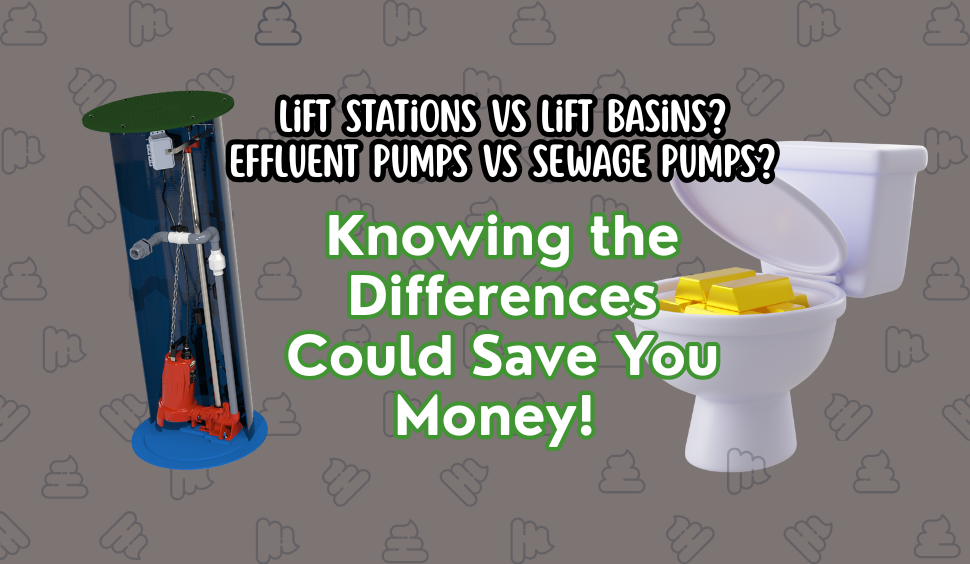
Understanding Lift Stations: Sewage Pumps vs. Effluent Pumping Systems
If you’ve ever built on a property where the home system is downhill from the sewer or septic, you’ve probably heard the term “lift station.” It might sound technical, but the idea is pretty simple: when gravity can’t do the job of moving wastewater, a lift station steps in to help.
But not all lift stations work the same way. Some are designed to handle everything—solids and liquids together—while others are built to pump only the liquid portion after solids have already settled out. Knowing the difference can save you money, headaches, and a lot of maintenance in the long run.
What Exactly Is a Lift Station?
In simple terms, a septic lift station is a tank with a pump inside that moves wastewater from one place to another—usually uphill or across long distances when gravity flow isn’t an option. It kicks in automatically when the tank fills to a certain level, sending the waste on its way.
Lift stations are pretty common in rural or hilly areas, where the septic tank or sewer main isn’t downhill from a house or building.
Lift Basins with Sewage Pumps

These systems handle raw, unprocessed wastewater directly from household plumbing, including solids, liquids, and everything in between. They typically consist of:
- A single chamber tank (or wet well)
- A heavy-duty sewage grinder pump or solids-handling pump
- Float switches to control pump operation
How It Works:
- Wastewater from the home enters the wet well.
- As the tank fills, a float switch activates the pump.
- The pump moves the raw sewage to either a septic tank, sewer main, or another processing stage.
Pros:
- Handles all wastewater in one system.
- Small footprint.
- Less expensive.
Cons:
- More wear and tear on pumps due to solids.
- Requires more frequent maintenance.
- Higher power consumption.
- Small capacity.
Lift Stations with Effluent Pumps
In contrast, effluent lift stations are used after solids have already settled in a septic tank. These systems only move the clearer liquid portion (effluent), which significantly reduces pump stress.
These setups involve:
- A two-chamber tank (or separate tanks)
- One chamber where solids settle
- A second chamber that collects liquid effluent
- An effluent pump, which is smaller and less robust than a sewage pump

How It Works:
- Wastewater enters the primary chamber where solids settle.
- The liquid flows into the second chamber (pump chamber).
- A float switch activates the effluent pump to move the liquid to a drain field, treatment unit or sewer main.
Pros:
- Pumps last longer and require less maintenance.
- Energy-efficient and lower operational costs.
- Less risk of clogs or mechanical failure.
- Large capacity.
Cons:
- More complex tank design.
- Larger footprint.
- More expensive
- Solids still need to be pumped out periodically by a septic pumping service.
Choosing the Right System
When deciding between the two, consider the site conditions and plumbing design:
- Use a raw sewage basin when waste must be lifted before entering the septic tank, or when space limitations prevent multiple tanks.
- Use an effluent lift station when a septic tank can be placed closer to the building, but the drain field or treatment area is uphill.
In many residential applications, using a traditional septic tank followed by an effluent pump system provides the best balance of efficiency, durability, and ease of maintenance.
Final Thoughts
Septic lift stations may be a necessity in many wastewater systems. Knowing whether you need a raw sewage pump or an effluent pump setup can greatly affect the reliability and cost of your system over time. Whether you’re building a new home, remodeling, or troubleshooting an existing system, understanding these differences empowers you to make smarter, more sustainable choices.

You can learn more about your septic system by purchasing Living With an Onsite Wastewater System on Amazon.