Conventional Septic System Installation in Central Oklahoma
Conventional lateral lines with chambers or perforated pipe across Central Oklahoma
✅ Nationally Recognized Septic Experts | ⭐ 4.9/5 Google Rating | 💙 Family Owned Since 2016
✅ Nationally Recognized Septic Experts
⭐ 4.9/5 Google Rating
💙 Family Owned Since 2016
What Is a Conventional Septic System?
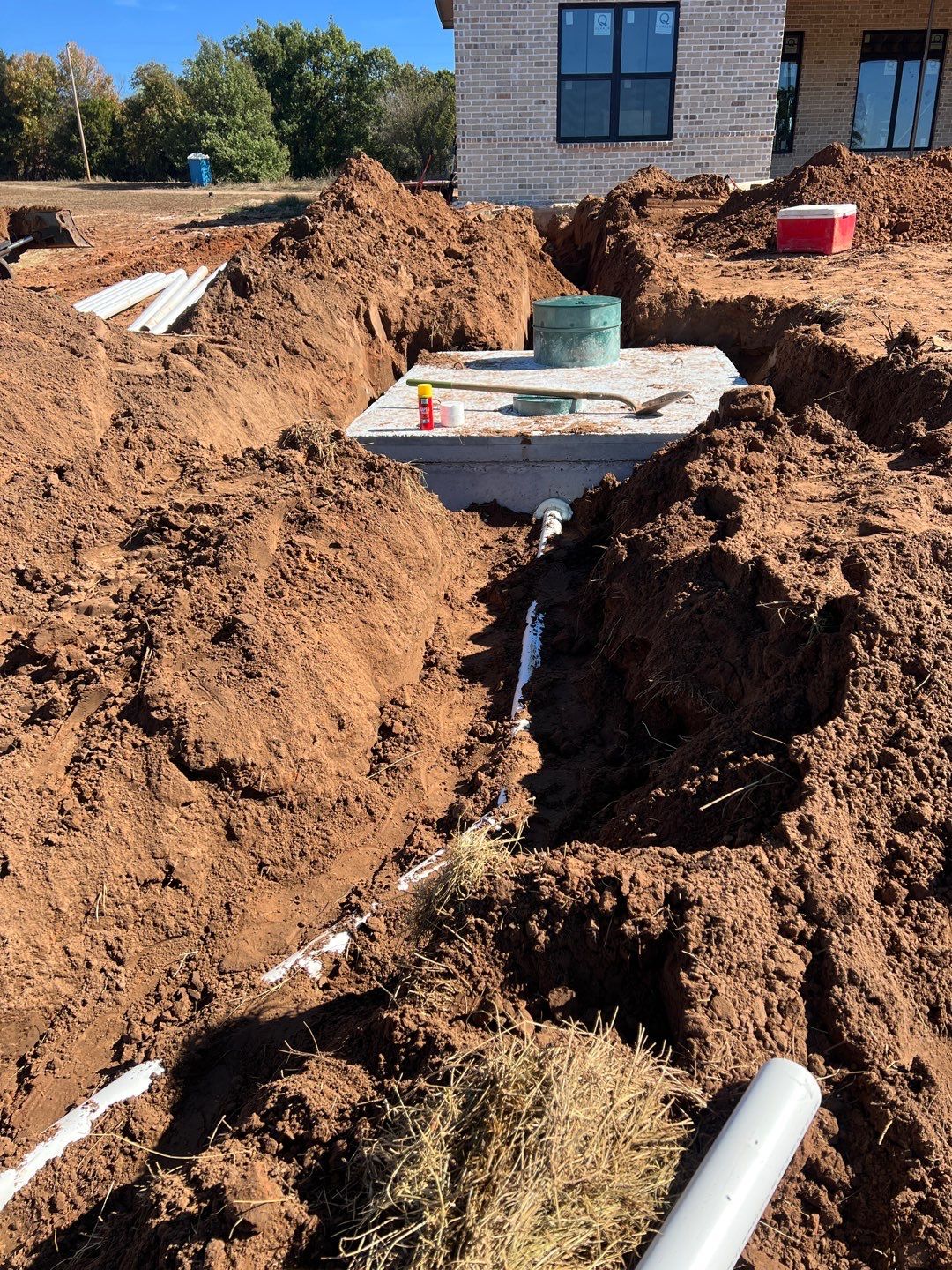
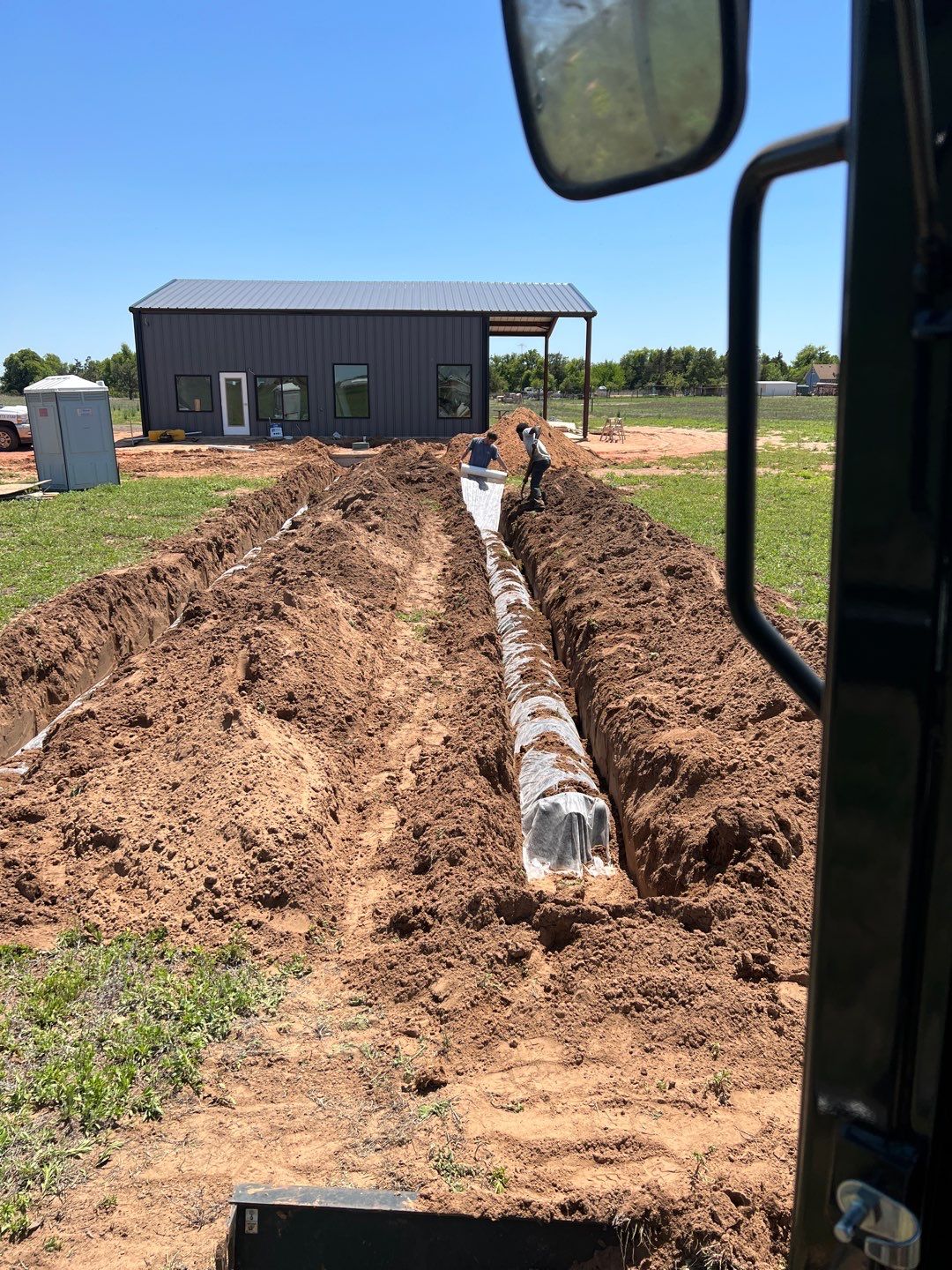
A conventional septic system is the classic setup: a septic tank and a set of lateral lines buried in your yard. Wastewater settles in the tank, and the liquid flows out into the lateral lines, where the soil does the rest of the treatment. There are no sprinklers, no chlorine to add, and far fewer parts to break.
Not sure which kind of system you have? If there are sprinkler heads in your yard and a control panel on your house, it’s an aerobic. If not, it’s probably conventional.
-
Bryan ★★★★★ September 2026
Maintains our septic system. GREAT company. Did the full install on our new home. Never had one problem. Does a full inspection every 6 months, replaces sprayer heads when needed. Called several times about advice on maintenance - great … More help and very knowledgable. I am so glad our builder picked this company! UPDATE 9/3/2026 - Got to meet the owners Dawn and Michael today! What wonderful people and so responsive to their customers. They did a smoke test to see if there was any leakage due to recent issues and recommended an extension on two exhaust pipes on the roof. Their installed system was working perfectly after 5 years! I've also gotten Septlink installed by them last year. Highly recommend. It monitors the whole system and alerts me and them when there are any problems. No more guessing games whether something is wrong, and I sure want to know when a pump or aerator issue is happening BEFORE "other" EXPENSIVE problems happen (if you know what I mean). In all my years, this is the best company I have ever had the pleasure working with and the owners are exceptional people. -
ASHLEY ★★★★★ August 2026
I reached out because we had an alarm going off. They were super friendly and quickly scheduled a time to come out, take a look, and repair the issue. Great service! -
Jane ★★★★★ August 2026
They are always ready to come and fix what's broken! Alicia, Heather and their guy who repairs are all reliable and kind. Customer service is superb! -
Renee ★★★★★ August 2026
-
Rebecca ★★★★★ August 2026
Cody was very helpful in quickly solving our minor issue while our units are under warranty. Thank you! -
Paul ★★★★★ August 2026
Cyclone installed an outside tornado shelter for my elderly father. They had one for people with mobility issues, which was perfect. The price was right and they got it done when they said they would. I would definitely recommend this … More service.
When a Conventional System Makes Sense
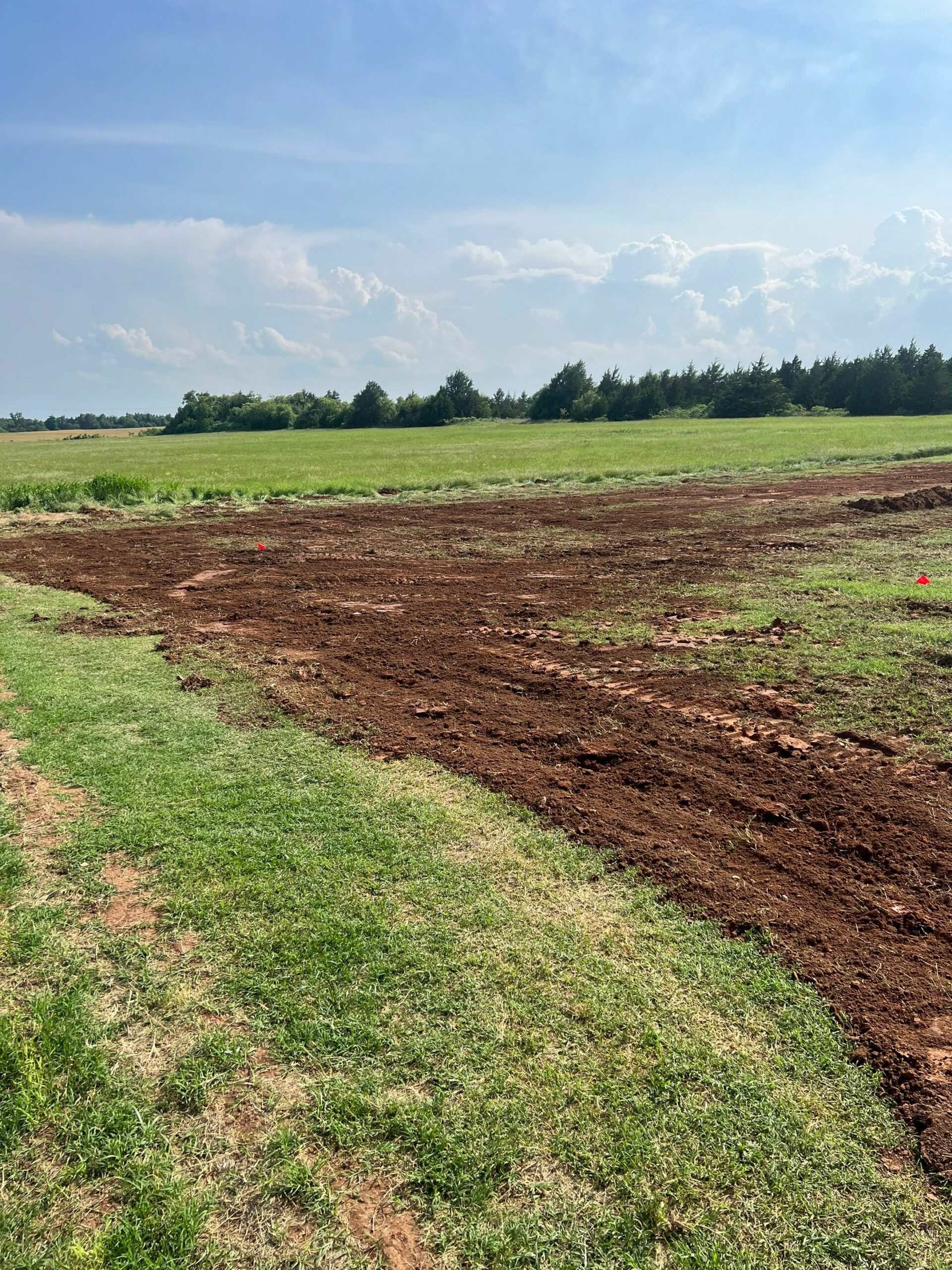
Whether you can have a conventional system comes down to your soil and your lot. The lateral lines rely on the soil to absorb and treat wastewater, so the soil has to be able to handle it, and you need enough room for the lines.
That’s decided by a soil profile, which Oklahoma requires before any system is designed. We have a certified soil profiler on staff, so the evaluation, the design, and the installation all happen under one roof.
We install both conventional and aerobic systems, so we have no reason to push you toward one. If your soil supports a conventional system, we’ll tell you. If it doesn’t, we’ll tell you that too, and explain why.
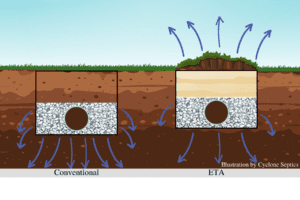
Some properties with clay soil can still use a variation called an ET/A system. It looks and works a lot like a conventional system, but it depends on evaporation so it uses more lateral line footage and usually needs sand or topsoil brought in.

Chambers or Rock and Pipe
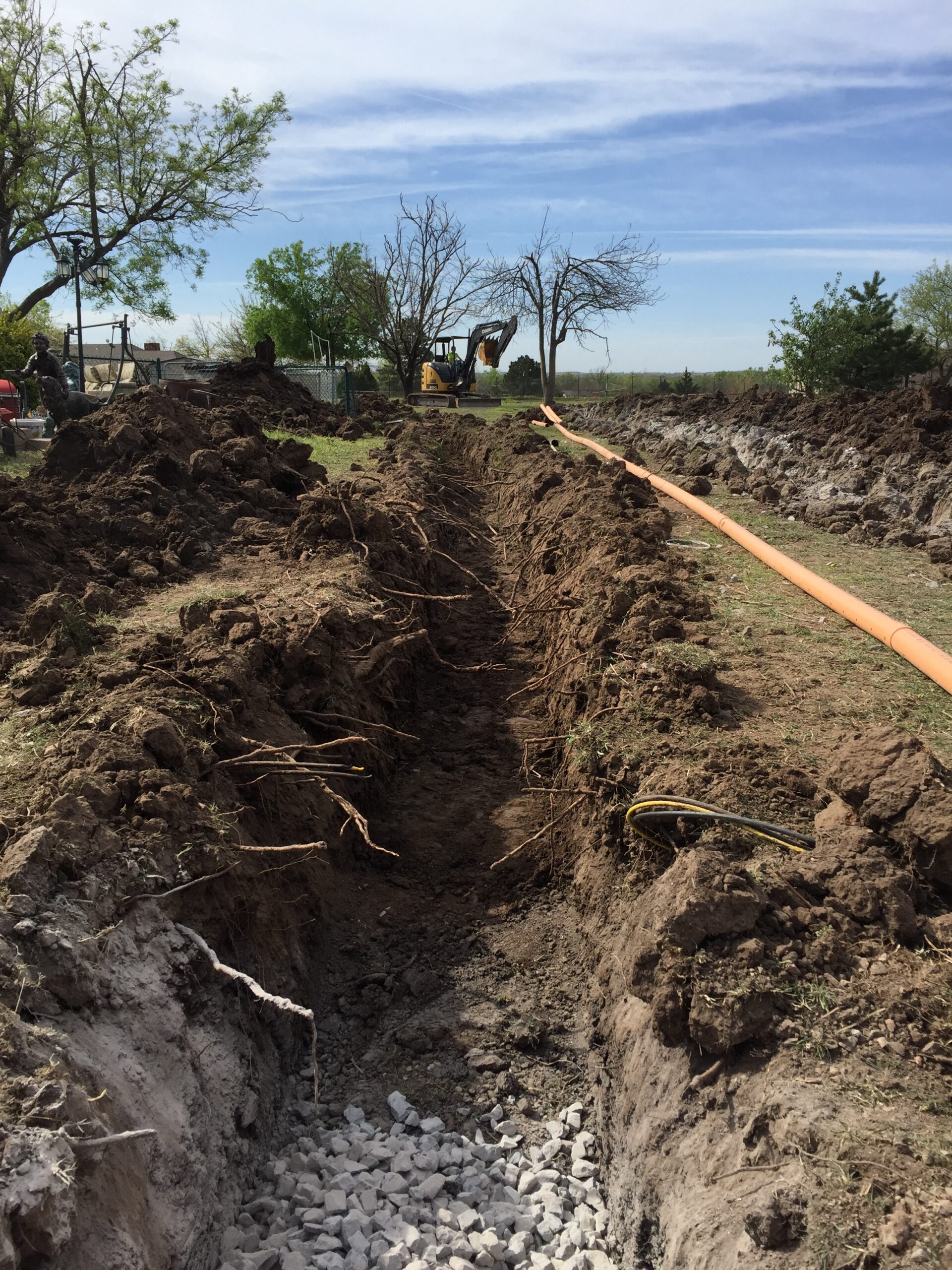
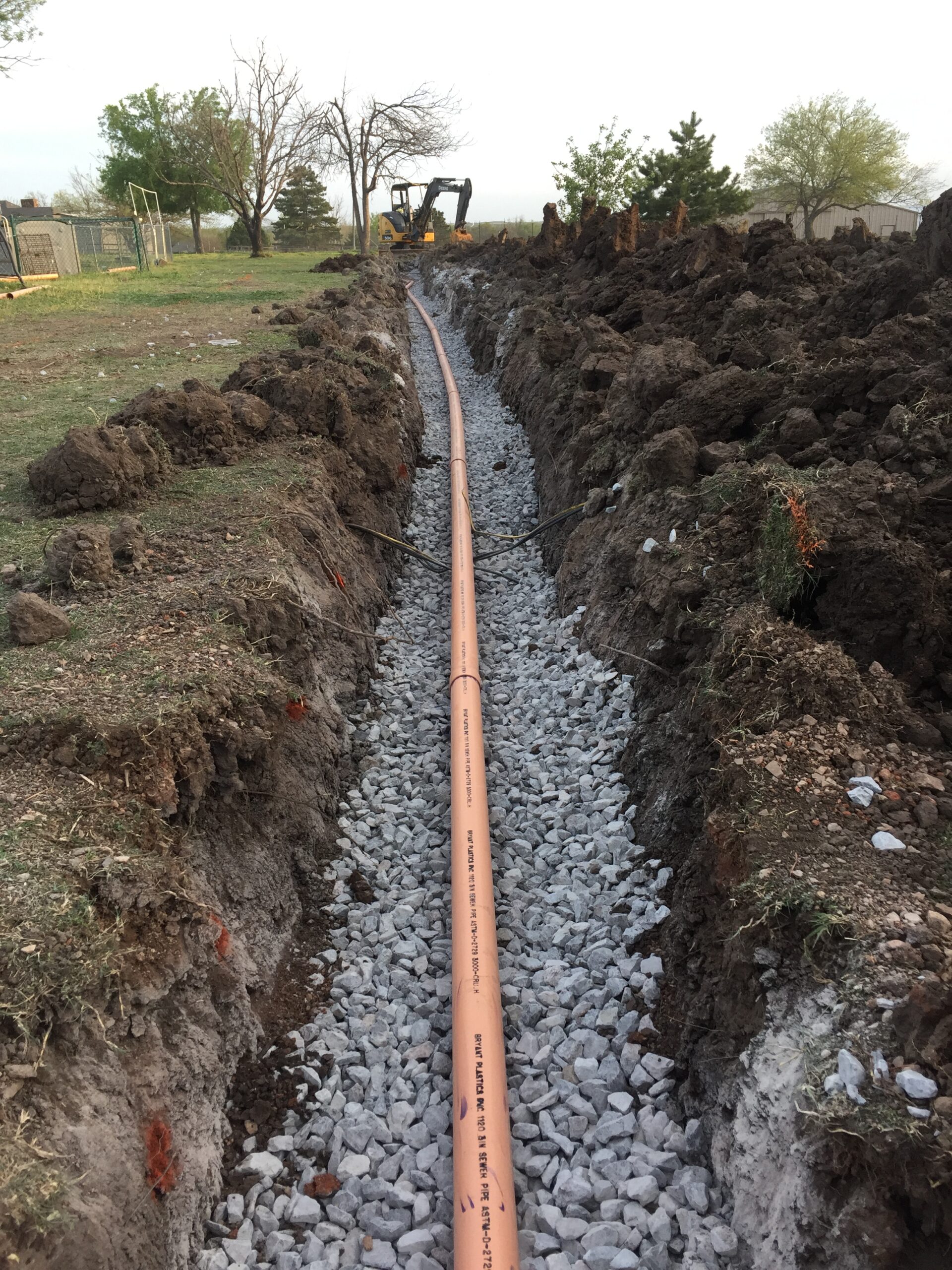
Lateral lines are installed one of two ways. Chamber systems use plastic chambers that create an open space underground for wastewater to spread out. Rock and pipe systems use perforated pipe laid in a bed of gravel. Both work well. Which one we recommend depends on your soil, your layout, and current material costs, and we’ll walk you through the tradeoffs during your site evaluation.
What's Included With Every Conventional Installation
We handle the design, the permit, and the installation, and we walk you through how your new system works once it’s in.
Every system we install has a 1 year workmanship warranty.
What Does a Conventional System Cost?
In sandy soil, a system can cost as little as $8,500. The price goes up with the amount of lateral line your property needs, and a conventional system in clay soil can end up costing more than an aerobic one. Book a site evaluation to get an estimate for your property.
Financing is available, so you don’t have to cover the whole cost up front.
Owning a Conventional System
Conventional systems are about as low-maintenance as septic gets, but low maintenance isn’t no maintenance. Here’s what owning one looks like:
- Pumping: Most conventional tanks need pumping every 3 to 5 years, depending on tank size and how many people live in the house.
- Protect your lateral lines: Don’t drive or park over them, and don’t build, pour concrete, or plant trees on top of them. Crushed or root-clogged lines are one of the most common reasons conventional systems fail.
- Watch what goes down the drain: Grease, wipes, and too much water at once are hard on any system, but lateral lines especially.
Maintenance plans are available for conventional systems too, if you’d rather not keep track of it yourself.
Replacing a Conventional System
Lateral lines don’t last forever.
If your yard stays soggy over the lines, drains are slow even after pumping, or you smell sewage outside, the lines may be failing. Not every problem means a new system. Sometimes a repair or rehabilitation gets things working again. When it doesn’t, we’ll show you what we found and walk you through your replacement options, including whether your soil still supports a conventional system or whether it’s time to switch to an aerobic.
FAQs About Your Conventional Installation
How do I know if my property can have a conventional system?
A soil profile tells us. It shows how well your soil absorbs water, and that determines whether a conventional system will work and how much lateral line it needs.
How much space does a conventional system need?
More than an aerobic system. The exact amount depends on your soil and the size of your home.
How long does installation take?
A conventional system typically takes 1 to 2 days but large systems may take longer.
Does a conventional system need electricity?
Usually not. Most conventional systems work by gravity. If your lateral lines sit uphill from the tank, the system may need a pump, and that pump needs power.
Can I drive or build over my lateral lines?
No. Vehicles, concrete, pools, and buildings can crush the lines or keep the soil from absorbing water. Keep the area over your lines as open lawn.
What's the warranty on a conventional system?
There is a 1 year warranty on the workmanship of your new septic system.
Ready to Plan Your Conventional System?
Whether you’re building or replacing, the first step is a site evaluation. We’ll look at your lot and soil, tell you honestly which system fits, and give you an exact quote. Then it’s your call.
Working with a builder? Have them call us and we’ll coordinate the schedule.