If you have an aerobic septic system, sooner or later you are probably going to hear the alarm go off.
The first thing to know is that an alarm does not automatically mean your septic system is going to backup. It means the system has detected something that needs attention. Sometimes that is simple. Sometimes it is more. Either way, ignoring the alarm is usually the worst option.
Before you call a septic company, there are a few things you can check yourself. You may be able to solve the problem without a service call, or at least give the technician enough information to make the service call faster.
What Does the Alarm on My Aerobic Septic System Mean?
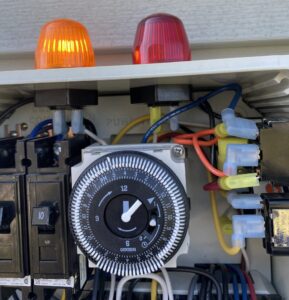
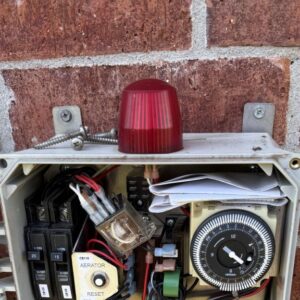
Your aerobic treatment system will have a control panel mounted outside the house, usually near the tank.
When something isn’t operating correctly, the panel sounds an alarm.
Either:
- The water level in the pump tank is too high.
- The agitator or air compressor is not operating properly.
Your control panel may have one or two alarm lights. The color or status of the light may give you a clue about what is going on.
Low Air Pressure Alarm
If your control panel has two alarm lights, one of them is yellow (or orange or amber). This is the compressor alarm. It tells you if the air pressure in your system is low.
If you only have a single red alarm light, a low pressure alarm could also be indicated by a steady or flashing light.
High Water Alarm
If your control panel has two alarms, the red means the water level in the tank is high.
If the panel only has one alarm, it could mean you have low air pressure or high water.
First, Silence the Alarm
Your aerobic septic control panel should have a silence or mute button.
The alarm gets your attention. Once you know there is a problem, you can silence it while you figure out what caused it.
Do not turn off the entire septic system just to stop the alarm!
What Does the Alarm Mean?
Has It Been Raining?
During heavy rain, water can enter a tank through damaged or poorly sealed risers, lids or other openings.
As long as the sprinklers are spraying, your alarm will turn off once the rain stops and the pump catches up.
If it continues or comes back after the rain stops and the water level drops, something else may be going on.
Did You Use a Lot of Water?
Did everyone take showers at the same time? Did you run several loads of laundry? Did someone fill and drain a large bathtub?
An aerobic septic system is designed to handle a certain amount of wastewater per day. It also needs time to process and discharge that wastewater.
Putting a large amount of water into the system in a short period can temporarily raise the water level enough to trigger the high-water alarm.
As long as the sprinklers are spraying, give the system time to catch up and the alarm will go off.
If it continues or comes back after the water level drops, something else may be going on.
Check the Aerator
An aerobic treatment unit uses oxygen to support the bacteria that treat wastewater.
That oxygen is supplied by an aerator or air compressor.
If the aerator stops working, the system will trigger an alarm.
Depending on the type of aerator, you may be able to hear or feel it running.
Some aerators can be repaired by the homeowner but others cannot be, there are plenty of ways to turn a small repair into a more expensive one.
Look for Obvious Damage Around the System
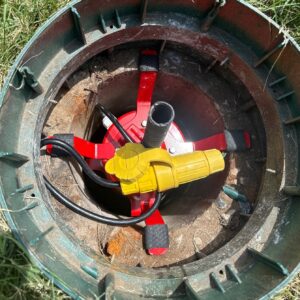
Walk around the system and look at the lids, risers and control panel.
You’re looking for obvious problems such as:
- A damaged or missing lid
- A damaged or missing riser
- Standing water around the tank
- Exposed or damaged wiring
- A damaged control panel
- Air lines that are damaged or disconnected
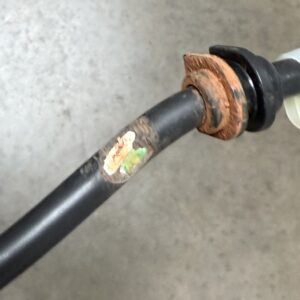
What If the Alarm Stops?
That’s good, but pay attention to what was occurring when it came on and what happens next.
If the alarm came on after unusually heavy water use and then cleared once the system caught up, you may not have a mechanical problem.
If it comes back, call someone to diagnose and make repairs.
An intermittent alarm can be an early sign of a failing pump, float or electrical component.
Should You Call a Septic Company Immediately?
Not every alarm requires an emergency service call.
If you had six people take showers, ran laundry all day and the high-water alarm came on, reducing your water use and giving the system time to catch up may be reasonable.
If you discover a tripped breaker, reset it once and the system begins operating normally, continue watching it.
But you should call for service if:
- The alarm won’t clear
- The alarm keeps coming back
- The breaker trips again
- The pump isn’t running when the high water alarm is on
- The aerator isn’t operating
- The sprinklers aren’t working
- The tank appears to be extremely full
- You see wastewater surfacing around the system
- Toilets or drains are beginning to back up
- You smell a significant change in odor around the treatment unit
- You simply aren’t sure what is happening
A service call is a lot cheaper than cleaning sewage out of your house!
Pumping the Tank Probably Isn't the Answer
A septic alarm does not automatically mean the tank needs to be pumped.
There are times when pumping is necessary as part of a repair, but the alarm itself isn’t a diagnosis.
The goal should be to find out why the alarm came on. If you aren’t sure why, it’s time to call a professional.