If you’ve been searching for septic tank cleaning or septic tank pumping, here’s the short answer: there isn’t a real difference. Both terms describe the same service, and Oklahoma law doesn’t care which word is on your invoice. What matters is whether the tank actually got emptied. You may have come across companies telling you these are two different services, so let’s look at where that idea comes from and what the state actually requires.
One explanation you may have seen is that septic pumping removes the liquid and some of the solids, while septic cleaning removes everything from the tank.
You can call it septic tank pumping. You can call it septic tank cleaning. You can call it a pump-out.
Whatever name a company puts on the invoice, Oklahoma rules require a licensed septic pumper to pump the septic tank empty and the state actually defines what “empty” means.
The State of Oklahoma defines what can be left in the tank after it is pumped. Or cleaned. Or whatever the company calls it.
If someone tells you that “pumping” means they only remove the liquid while “cleaning” means they remove the sludge and solids, there’s a pretty big problem with that explanation:
Oklahoma doesn’t allow a licensed pumper to leave a tank full of sludge just because they called the service “pumping.” The tank should be empty (or nearly empty) when they leave.
Does a Septic Tank Need to Be Scrubbed Clean?
No.
This is probably where the word “cleaning” causes some confusion.
We aren’t trying to make the inside of your septic tank look new.
It doesn’t need to be scrubbed or disinfected. There will probably be some material stuck to the sides of the tank when we’re finished, and that’s fine.
It’s a septic tank.
The goal is to remove the contents of the tank, including the accumulated sludge and scum. We aren’t trying to make it clean enough to eat off of.
Oklahoma gives us a pretty simple standard. No more than 5% of the tank’s volume should remain after pumping.
That’s what matters.
How Empty Does a Septic Tank Have to Be in Oklahoma?
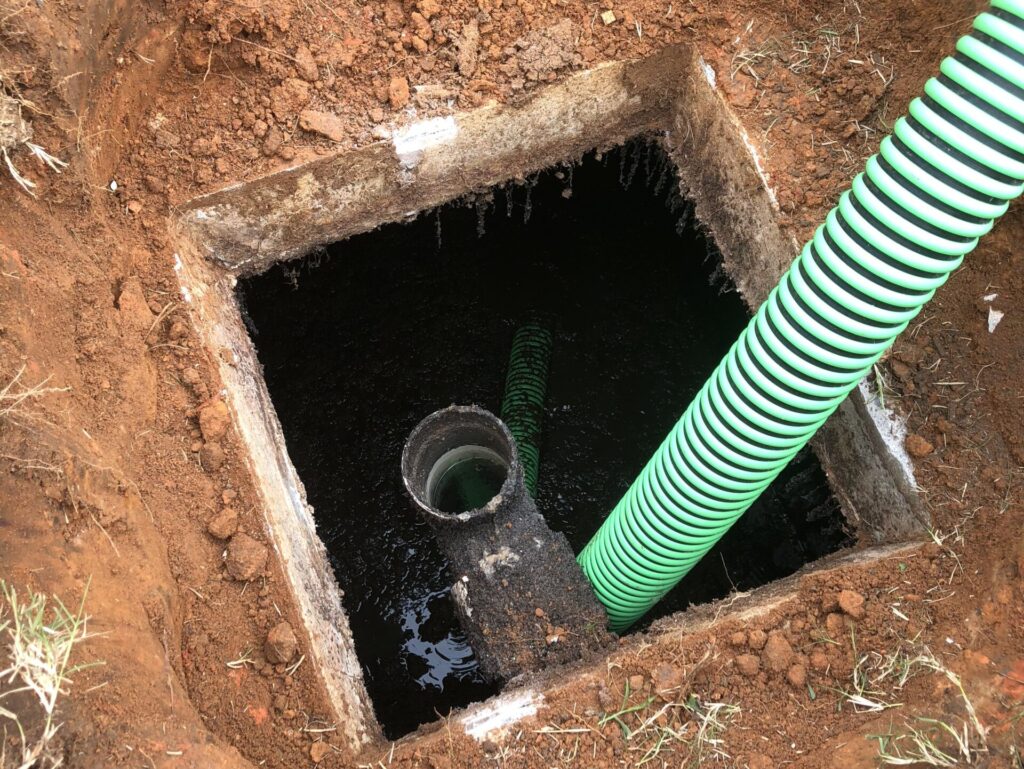
Oklahoma Administrative Code 252:645-1-6 requires licensed septic pumpers to pump septic tanks empty.
The rule defines empty as no more than 5% of the tank’s volume remaining.
Which means, a 1,000-gallon tank can have no more than 50 gallons remaining.
If a company only pumps the liquid and leaves behind the sludge and scum in a septic tank, they can’t get around the requirement by saying they “pumped” it instead of “cleaned” it.
The name of the service doesn’t matter.
What was left in the tank does.
What Should Be Removed During Septic Tank Pumping?
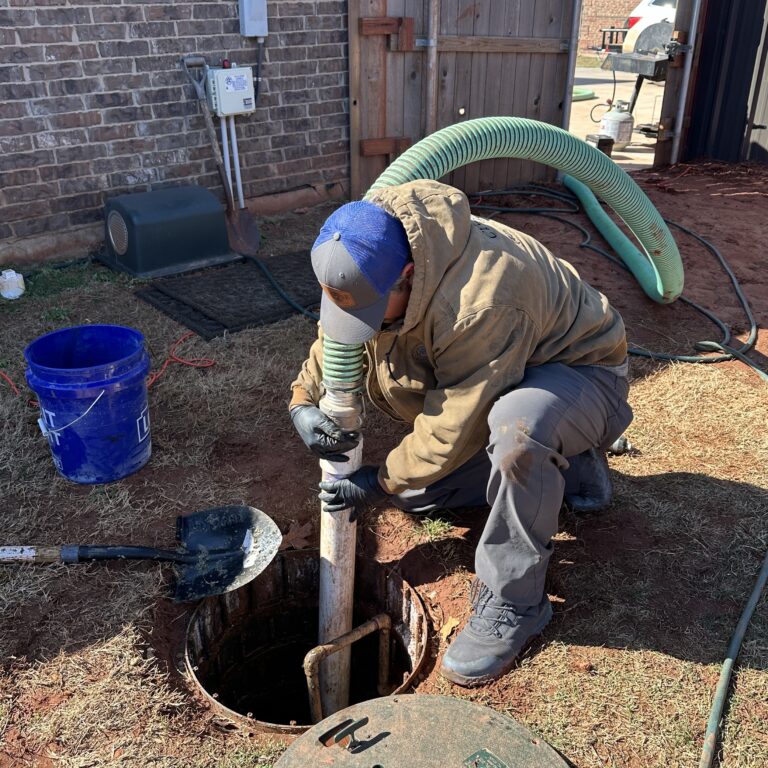
A proper septic pump-out should remove the wastewater, floating scum, sludge and other pumpable material from the tank.
The goal isn’t to stick a hose through the opening, suck until nothing easy comes up and leave.
The goal is to empty the tank.
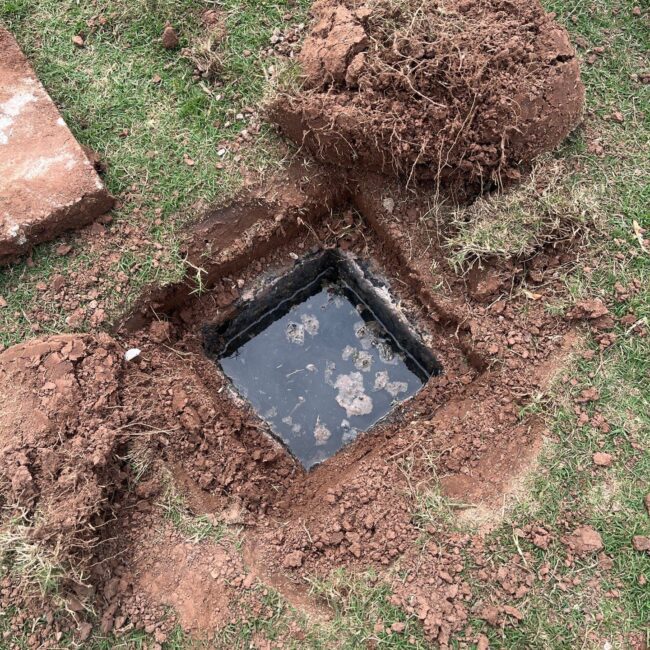
A tank that was pumped three years ago may be pretty easy. A tank that hasn’t been pumped in 15 years might take considerably more work.
Either way, the end goal is the same.
How Often Should You Have Your Septic Tank Pumped?
There isn’t one answer that works for every house.
It depends on the size of your septic tank, how many people live in the house, how much water you use, whether you use a garbage disposal and what you’re putting down your drains.
A 1,000-gallon tank serving a family of six isn’t going to accumulate solids at the same rate as the same tank serving one person.
What matters is how quickly your particular tank is accumulating solids.
The chart below is a good starting point for figuring out when to pump your tank.

Do Aerobic Septic Systems Need to Be Pumped?
Yes.
This is another misconception we run into.
Aerobic septic systems still accumulate solids and still need to be pumped. In fact, many need pumped more often.
If your aerobic systems has a trash tank before the aerobic treatment unit you may be able to go longer between cleanouts.
But, eventually, those solids have to be removed.
If they aren’t, they can start moving into other parts of the system and create problems that are a lot more expensive than pumping the tank.
Whether you call it aerobic septic tank pumping or aerobic septic tank cleaning doesn’t really matter.
The solids still need to come out before they cause failures or smells.
Does a Gurgling Toilet Mean Your Septic Tank Is Full?
Not necessarily.
This is another place where homeowners can spend money they didn’t need to spend.
If your toilet is gurgling or your drains are slow, your septic tank may need to be pumped.
You could also have a clogged sewer line or another problem.
You could have a plumbing problem that has absolutely nothing to do with how much sludge is in your septic tank.
That’s one of the reasons having septic and plumbing under the same roof is useful. We’re not forced to make every problem a septic problem or every problem a plumbing problem.
We can figure out what is actually going on.
Septic Tank Cleaning vs. Septic Tank Pumping: What's the Difference?
Not much.
People use the terms septic tank cleaning and septic tank pumping to describe the same basic service.
A company may choose to call one service “cleaning” and another “pumping,” but that doesn’t change what Oklahoma requires from a licensed septic pumper.
The tank has to be pumped empty.
Empty means no more than 5% of the tank’s volume remaining.
So I wouldn’t spend much time worrying about whether you’re hiring someone to “clean” your septic tank or “pump” your septic tank.
I’d ask a much simpler question.
Are you emptying the tank?
Cyclone Septic & Plumbing pumps conventional and aerobic septic systems throughout Guthrie, Edmond, Piedmont, Arcadia, Jones, Cashion, Crescent and the surrounding Oklahoma City metro.
If you’re having septic or plumbing problems and aren’t sure whether you actually need your tank pumped, give us a call or schedule your septic pumping. We’d rather figure out what’s wrong than sell you something you don’t need.