Aerobic septic systems are common throughout Central Oklahoma, but most homeowners don’t really know what is happening inside the tanks in their yard.
The system itself isn’t that complicated once you understand what each part does.
What Is an Aerobic Septic System?
An aerobic septic system uses oxygen and oxygen-loving aerobic bacteria to treat wastewater before it is dispersed.
You’ll also hear them called aerobic treatment systems, aerobic treatment units or ATUs, and aerated septic systems. There are differences between manufacturers and designs, but they all use the same basic idea: add oxygen to wastewater so aerobic bacteria can break down the waste more efficiently.
The easiest way to think about an aerobic septic system is as a small wastewater treatment plant for your house.
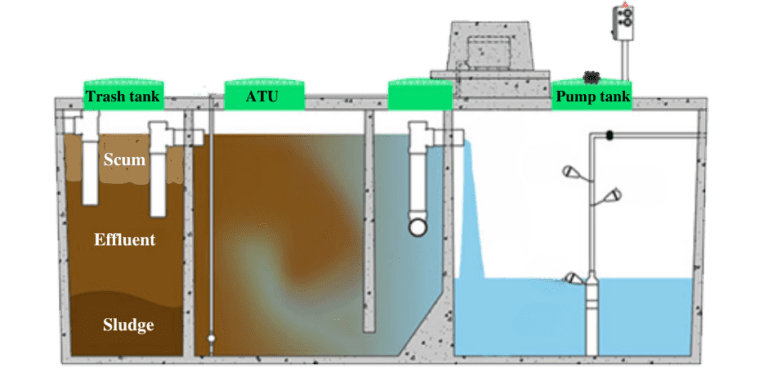
Wastewater comes into the system trash tank where solids are separated, then it is treated in the ATU where oxygen is added and the treated effluent is eventually dispersed onto the soil through the sprinklers.
The treatment process using oxygen is what separates an aerobic system from a conventional septic system.
Aerobic vs. Conventional Septic: What's the Difference?
A conventional septic system is anaerobic, meaning the bacteria doing the work don’t need oxygen.
Wastewater enters the septic tank, solids settle to the bottom, grease and other lighter material float to the top, and anaerobic bacteria begin breaking down the organic material. The liquid (or effluent) eventually leaves the tank and go to the lateral lines, where the soil does much of the remaining treatment.
An aerobic septic system adds oxygen.
An air compressor pumps air into the effluent, allowing aerobic bacteria to thrive. Those bacteria are very efficient at breaking down the waste, so an aerobic system provides a higher level of treatment before the wastewater leaves the system.
There is a tradeoff. A conventional gravity system can be incredibly simple. An aerobic system has an air compressor, pump, floats, control panel, alarms and other components that need electricity and eventually need maintenance.
That doesn’t make one system better than the other. If your property has good soil and enough room for a conventional system, simple can be a very good thing.
But plenty of Oklahoma properties don’t have that option.
How Does an Aerobic Septic System Work?
Different manufacturers build their systems a little differently. Some combine several stages into one tank while others use separate tanks or compartments.
The basic treatment process is usually the same:
House → Trash Tank → Aeration → Clarification → Disinfection/Pump Tank → Dispersal
Here’s what is actually happening inside the tank.
Step 1: Wastewater Enters the Trash Tank
Everything that goes down a drain in your house eventually reaches the septic system. Toilets, showers, washing machines, dishwashers and sinks all contribute wastewater.
The first stop is usually the trash tank or pretreatment compartment.
Heavy solids settle toward the bottom while grease and other lighter material can float toward the top. Material that bacteria can’t break down stays here until it is removed during pumping.
The trash tank keeps most of those solids and other material from entering the aerobic treatment portion of the system.
Step 2: The Aeration Chamber Adds Oxygen
This is where an aerobic septic system is different from a conventional septic system.
An air compressor, commonly called an aerator or agitator, supplies air to the treatment chamber. Depending on the system, that air may pass through a diffuser near the bottom of the tank, creating the bubbling action inside the chamber.
The oxygen allows aerobic bacteria to thrive.
The bacteria feeds on the organic material in the wastewater and break it down.
The bacteria are doing most of the biological treatment. The equipment is creating the environment they need to do their job.
What Happens if the Aerator Stops Working?
The air compressor is an important part of an aerobic septic system.
If it stops supplying air, the bacteria begin to die and treatment quality begins to suffer.
What makes this tricky for homeowners is that everything inside the house may still seem completely normal. The toilets still flush. The sinks still drain.
The only thing you may notice, other than the alarm itself, is your sprinklers starting to smell.
If you have an alarm, do not ignore it! You should call for service so the problem can be diagnosed before it gets worse.
Step 3: The Wastewater Is Clarified
After aeration, the wastewater needs a still area where suspended material can settle.
This happens in the clarification portion of the system.
The exact design varies between manufacturers, but the purpose is basically the same. Solids are separated from the water before it moves to the pump tank.
By this point, the wastewater has received a lot more treatment than the effluent leaving a conventional septic tank.
Step 4: Disinfection and the Pump Tank
After treatment, the effluent moves into the pump tank.
Aerobic systems in Oklahoma that use surface application also disinfect the treated wastewater before it is dispersed. Chlorine is common, although UV disinfection methods may be used.
Floats inside the pump tank monitor the water level and, when needed, the floats turn the pump on and sends the treated effluent to the sprinklers.
There are typically three floats in the pump tank.
The first float will turn the pump on during the time set on the timer, if the water level is high enough.
The second float will override the timer if the water level reaches it and spray regardless the time of day.
Finally, the last float will turn on the alarm to alert you the water level in the tank has continued to rise.
Step 5: The Treated Wastewater Is Dispersed
Most residential aerobic systems in Central Oklahoma use surface spray.
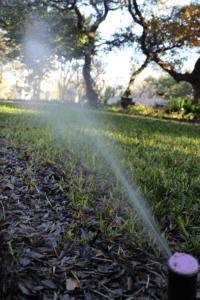
The pump sends the treated and disinfected wastewater to spray heads located in your yard.
No, the sprinklers don’t spray raw sewage.
But, remember, this is treated wastewater, not potable water. Don’t drink it, let the kids play in it or use it to water your vegetable garden.
How Do I Know if I Have an Aerobic System?
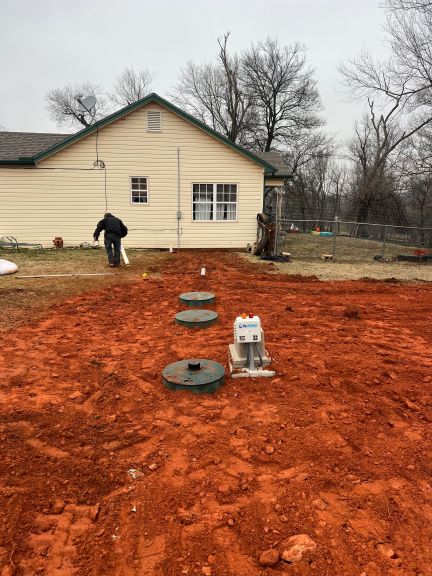
Most of the system is underground, so homeowners don’t see much of what is actually happening.
From the surface, you may see:
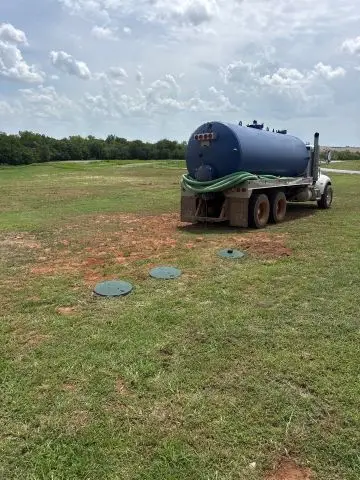
- Green access lids
- An air compressor
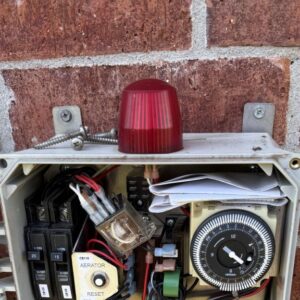
- A control panel with an alarm
- Purple topped spray heads
Under those lids are the trash tank, aeration chamber, clarifier, pump tank, floats, diffuser and other components.
The exact layout depends on the manufacturer and system design.
Those access lids need to stay accessible. We understand why homeowners want to hide them.
But burying them under dirt, mulch or landscaping is a problem when the system needs service.
Does an Aerobic Septic System Need Electricity?
Yes.
The aerator, control panel and pump require electricity.
A short power outage doesn’t mean you need to panic. The tanks provide some temporary storage for the wastewater.
Just remember that wastewater keeps entering the system every time someone flushes a toilet, takes a shower or runs the washing machine.
During an extended outage, reduce your water use or use a generator until power is back on and the system can return to normal.
Do Aerobic Septic Systems Need to Be Pumped?
Absolutely.
A common myth is that aerobic systems don’t need pumping because the bacteria consume the waste.
They consume a lot of organic material. They don’t eliminate everything.
Solids still accumulate and eventually need to be cleaned out.
How frequently a system needs pumping depends on household size, water usage, tank capacity and what is being put down the drains.
What Maintenance Does an Aerobic Septic System Need?
Aerobic systems have more equipment than a basic conventional gravity system, so they need more attention.
Maintenance should include checking:
- Aerator operation and airflow
- Pump operation
- Floats
- Alarm functions
- Control panel
- Filters
- Spray heads
- Disinfection equipment
- Sludge accumulation
- Overall treatment condition
Regular service gives you a better chance of finding problems while they’re still small problems.
Oklahoma requires the installer provide 2 years of service on all new installations.
Homeowners should understand the requirements for their particular system rather than assuming aerobic maintenance works the same way as a conventional septic tank. Having a maintenance plan ensures your tank is inspected regularly and problems are caught early.
Why Is My Aerobic Septic Alarm Going Off?
A high-water alarm can mean the pump isn’t working, a float has failed, there is an electrical problem or you’ve put a lot of water into the system in a short period of time.
Or the alarm may indicate that the aerator isn’t working.
Start with the obvious things. Check whether the power is out or a breaker has tripped. If you have a high-water alarm and don’t know the cause, reduce water use until you figure out what’s happening.
Most importantly, don’t repeatedly silence an alarm and assume the problem went away.
The alarm is there for a reason!
Should an Aerobic Septic System Smell?
A properly functioning aerobic system shouldn’t make your yard smell like raw sewage.
It could be related to aeration, excessive water use, treatment problems or another issue.
How Long Does an Aerobic Septic System Last?
The tanks can last for decades when properly installed and maintained. Mechanical components such as aerators, pumps, floats and spray heads won’t necessarily last as long as the tanks and should be expected to need repair or replacement at some point during the life of the system.
Is an Aerobic Septic System Better Than a Conventional Septic System?
Not necessarily.
Aerobic systems provide a higher level of treatment, which can be a major advantage when we’re dealing with difficult soil or site conditions.
But that additional treatment comes with electricity, mechanical components and additional maintenance.
If your property has suitable soil, adequate space and the right conditions for a conventional gravity system, its simplicity can be a big advantage.
Start with getting a site evaluation from Cyclone Septic & Plumbing and let us help you determine which system makes sense for your project.