
If you have never had a septic tank pumped before, you may have no idea what is going to happen.
Do you need to be home? Do you need to know where the tank is? Is someone going to dig up your whole yard? How long does it take? And probably the biggest question: what exactly are you paying a septic company to do?
Septic pumping is actually pretty straightforward, but there is a right way to do it. Here is what you can expect when a septic company comes to pump your tank.
Before the Septic Company Arrives
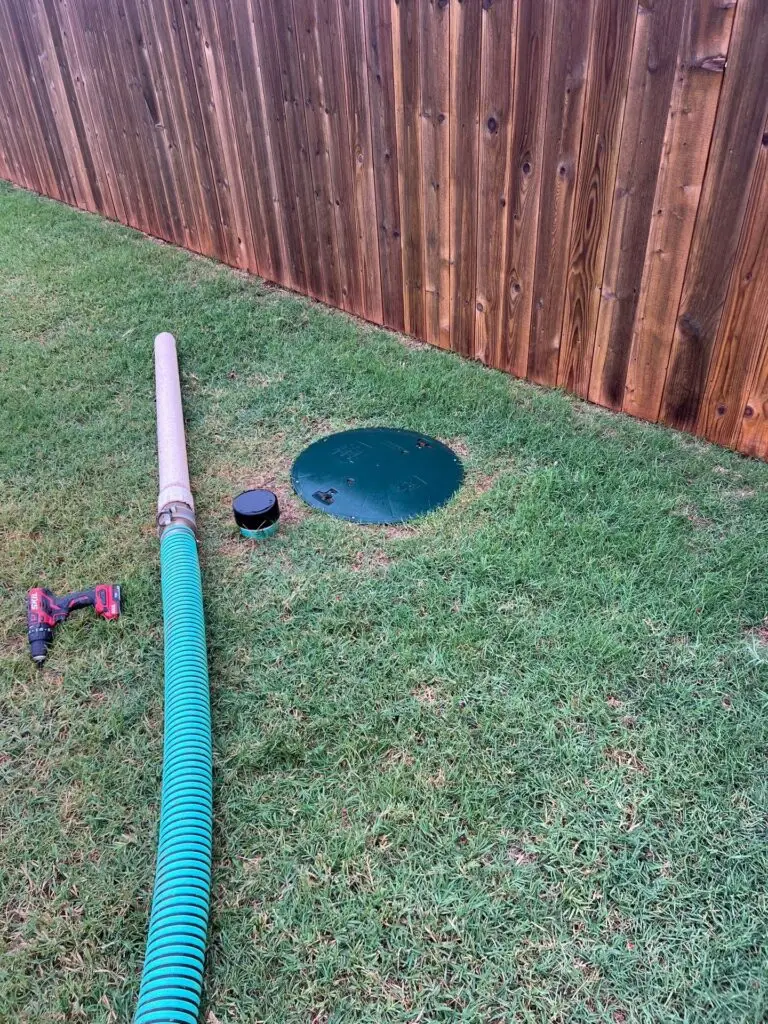
Obviously, the first thing we need is access to the septic tank!
If your tank has risers with lids at ground level, this part is easy. If the tank is buried, the lids may need to be located and uncovered before it can be pumped.
Knowing approximately where your septic tank is located can save us time (and you money!), but don’t worry if you have absolutely no idea.
Depending on the property, we may be able to locate the tank using records, where the plumbing leaving the house, probing, satellite images or other locating methods. Sometimes it takes a little detective work.
If you have gates, dogs, locked access, or anything else that might keep us from getting to the tank, make sure those are taken care of before your appointment.
Let the pumper know ahead of time if you don’t know where the tank is, if you know it is buried more than 1 ft deep or if you’re having any problems like slow toilets or water standing.
Finding and Opening the Septic Tank
Once we locate the tank, we need to access the opening.
A septic tank should be pumped through an opening that gives the pumper access to the contents of the tank. Pumping through a small inspection port or cleanout does not allow the tank to be properly cleaned.
If your lids are buried, some excavation may be necessary to expose them.
This doesn’t mean we are digging up your entire yard. Usually it’s a small area so we can expose the access points needed to properly pump and inspect the tank.
If you are tired of digging up the lids every time the tank needs service, this is also a good time to ask about installing risers that bring the access lids to grade.
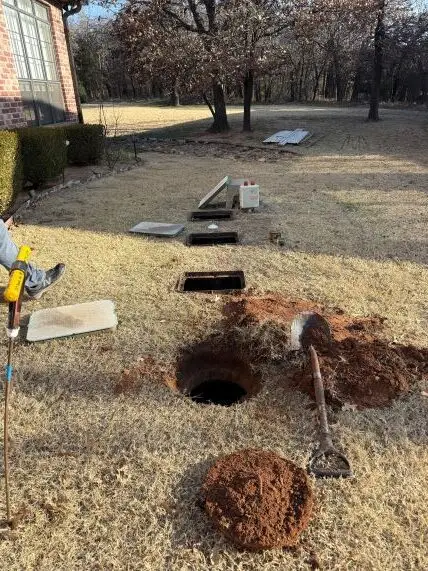
What Happens During Septic Tank Pumping?
Once the tank is open, the technician will begin sucking out the contents with a vacuum truck.
A septic tank doesn’t contain just liquid sewage. Over time, the contents separate into layers.
Solids settle toward the bottom and form sludge. Fats, oils, grease, and other floating material form a scum layer near the top. Liquid remains between those layers and flows out of the tank during normal operation. This liquid is called effluent.
The entire point of septic pumping is to remove the sludge and scum before too much of it builds up in the tank or makes its way into the drainfield.
In Oklahoma, state rules require a septic tank to be cleaned so that no more than 5% of the tank’s liquid capacity remains.
Whether a company calls the service “septic pumping,” “septic cleaning,” or “septic tank cleaning,” the goal should be the same: remove the contents of the tank.
We May Find Problems While the Tank Is Open
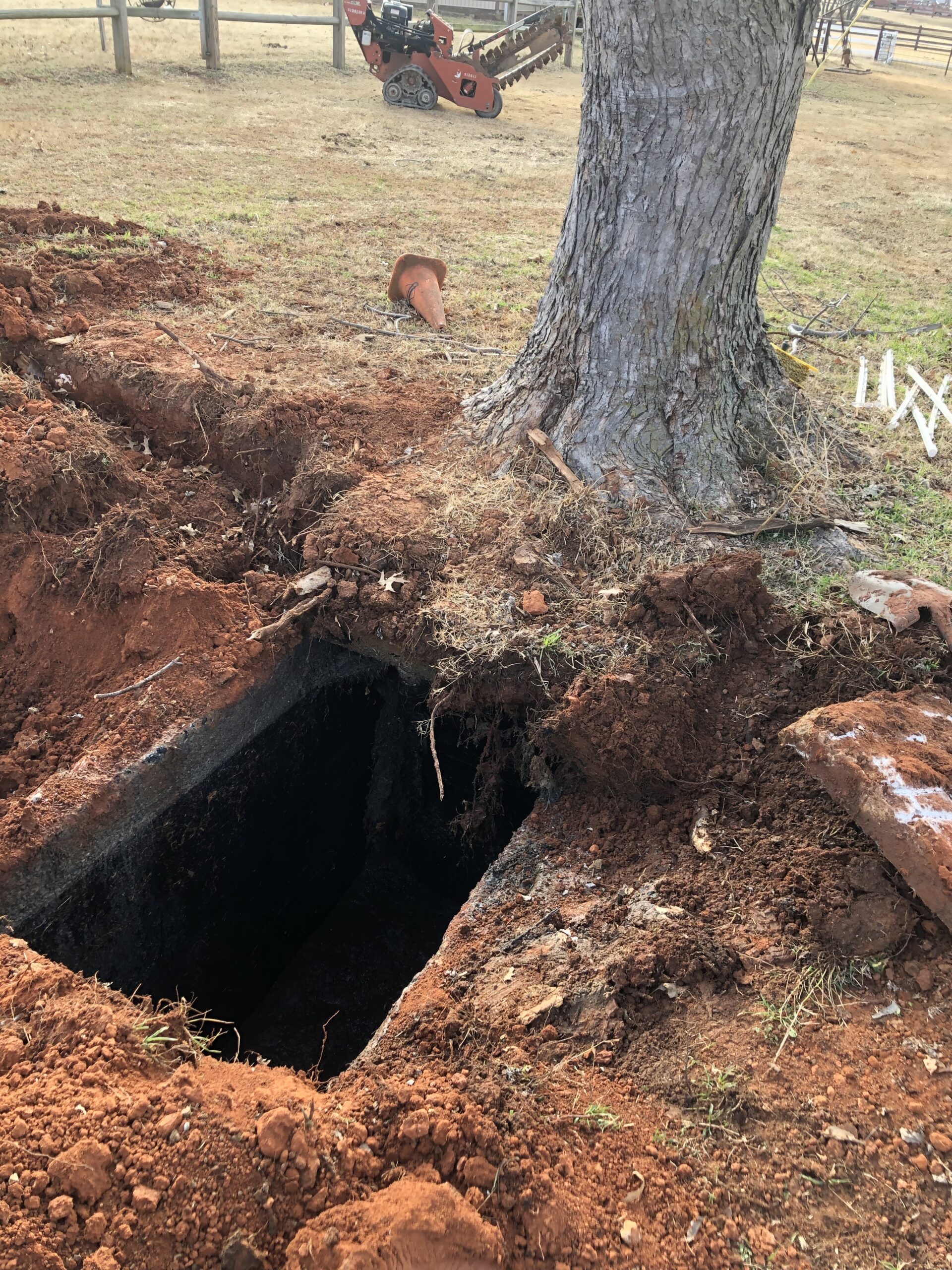
One of the benefits of pumping a septic tank is that we can see things that aren’t visible when the tank is full.
Once the tank is empty, we may notice damaged components, excessive solids, roots, deterioration, unusual water levels, signs of groundwater infiltration, or other conditions that deserve attention.
That doesn’t automatically mean you need an expensive repair.
But if something doesn’t look right, the pumper should tell you about the issue and provide photos.
This is also why you shouldn’t choose a septic company based entirely on who has the cheapest pumping price. The person pumping your septic tank should know what they are looking at!
Will It Smell?
Yes, probably.
We are opening a tank full of sewage and pumping it into a vacuum truck. There is going to be some odor.
Fortunately, it normally doesn’t last long. Once the pumping is finished and the tank is closed back up, the smell should dissipate.
If you are planning a backyard wedding the same afternoon, maybe don’t schedule your septic pumping that morning!
How Long Does Septic Tank Pumping Take?
A straightforward residential pumping appointment may not take very long once the tank is located and accessible.
What usually adds time isn’t the actual pumping. It is finding buried tanks, exposing lids, dealing with difficult access, unusually heavy solids, multiple tanks, or discovering a problem once the system is opened.
Every property is a little different.
At Cyclone Septic & Plumbing, we include up to 1 hr of service with every pump job. That should be plenty of time if the homeowner knows where the tank is and it hasn’t been neglected.
Do I Need to Be Home?
Not necessarily.
If you have a credit card on file, we have access to the property, know where the system is located, and don’t need you to unlock gates or provide other information, many pumping jobs can be completed without the homeowner there.
That said, if this is your first time having the system pumped or you don’t know much about your septic system, it’s a great time to learn more about your system from the pumper!
What Happens After the Tank Is Pumped?
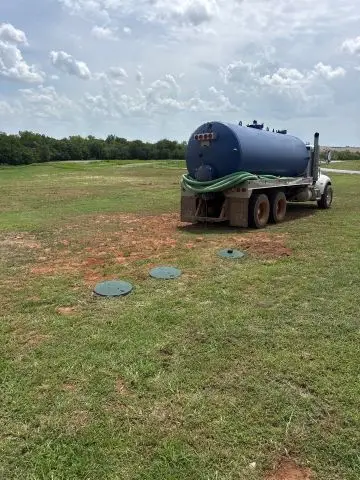
After pumping is complete, the access points are closed and covered.
Don’t be surprised when the tank starts filling with water again. That is exactly what is supposed to happen.
A septic tank is designed to operate full. Pumping removes the accumulated solids and scum. It does not mean the tank is supposed to remain empty.
As you use water in the house, wastewater will begin filling the tank again. Eventually it will return to its normal operating level and resume flowing through the system.
You do not need to fill the tank yourself unless your septic professional specifically tells you to do so for a particular reason – like if you have a plastic or fiberglass tank.
How Often Should You Pump Your Septic Tank?
There isn’t one perfect schedule for every house.
How quickly solids accumulate depends on the size of your tank, number of people in the home, water use, garbage disposal use, what you put down the drains, and the type of septic system you have.
A household with two people and a 1,500-gallon tank isn’t putting the same load on its system as a family of six with a 1,000-gallon tank.
The chart here is a good rule of thumb for pumping your tank but your pumper can tell you if you need to pump more often or can go longer.

Septic Pumping Is Also a Good Time to Learn About Your System!
Most homeowners don’t think about their septic system until something goes wrong.
It’s understandable. When a septic system is working correctly, you flush the toilet and forget about it.
But pumping gives you an opportunity to learn a lot about the system.
Find out where the tank is. Find out where your lateral field or other disposal area is located. Ask what type of system you have. If the lids are buried, consider risers. If the technician sees something unusual, ask them to show you.
Five minutes of education while the tank is open can save you a lot of confusion later.
Are You Ready to Get Your Septic Tank Pumped?
Cyclone Septic & Plumbing provides septic tank pumping and septic service throughout Edmond, Guthrie, Piedmont, and communities across the Oklahoma City metro.
We don’t just show up with a vacuum truck and suck the water out of the tank. Our technicians work with septic systems every day, and if we see something that doesn’t look right, we will tell you.
If you aren’t sure when your tank was last pumped, don’t know where it is, or just want someone to take a look at your system, give Cyclone Septic & Plumbing a call.